What Does a Commercial Refurbishment Actually Involve?
The phrase “commercial refurbishment” gets used to cover an enormous range of work — from a single room repaint through to a full strip-out and fit-out of an entire building. If you’re planning a refurbishment project and trying to understand what you’re actually commissioning, here’s a straightforward breakdown of what’s typically involved.
The Initial Survey and Scope
Any properly managed commercial refurbishment starts with a thorough site survey. This isn’t just a walkthrough to admire the problem — it’s the point at which a good contractor identifies everything that needs to happen in the right sequence, flags any issues that could affect programme or cost, and establishes what the end result actually needs to look like.
This stage matters more than most clients realise. A refurbishment that’s been properly surveyed and scoped is far more likely to be delivered on time and on budget than one that’s priced off a brief phone call. At Wallace Contracts, we always carry out a full site visit before providing a written quotation — it protects both sides.
Strip-Out
Many commercial refurbishments begin with some level of strip-out: removing existing fixtures, partitions, flooring, ceilings or fittings before the new works can begin. The scope of strip-out varies enormously — it might be lifting a carpet tile and removing a couple of partition walls, or it might be gutting an entire floor back to the structural shell.
Strip-out generates waste, which needs to be managed and disposed of correctly. A responsible contractor will have waste carriers’ licences, provide waste transfer notes, and demonstrate that materials are being disposed of legally — this matters particularly for clients who have environmental reporting obligations.
Building Work and Structural Changes
Depending on the scope, a commercial refurbishment may involve structural changes — moving or creating doorways, installing new partitioning, building extensions, or making alterations that require building regulations approval. Where this is the case, the work needs to be designed, approved and sequenced correctly before decoration or finishing trades begin.
For clients in Stoke-on-Trent and across the Midlands, Wallace Contracts handles building works as part of our multi-trade commercial refurbishment service, coordinating structural and building elements alongside decoration and fit-out to keep the programme tight.
Mechanical and Electrical Works
Heating, ventilation, lighting, data cabling and power all typically need to be addressed as part of a significant commercial refurbishment — either because the existing systems are being reconfigured, or because the new layout requires new service runs. These trades need to be coordinated carefully with the building and decoration programme so that ceilings and walls aren’t finished before cabling has been chased in, or lighting positions haven’t been agreed.
Decoration and Finishing Trades
For most commercial refurbishments, painting and decorating is the trade that clients and their customers notice most — it’s the finish that everyone sees. Getting this right means proper surface preparation (filling, sanding, priming) before a brush goes near the wall, using the right paint specification for the environment, and applying it to a standard that actually looks good rather than just technically qualifying as “decorated”.
We’re a Dulux Trade Contract Partner, which means our clients benefit from access to Dulux’s commercial-grade paint specifications and colour consultancy alongside our own application expertise. See our commercial painting and decorating services.
Flooring
Flooring is often one of the last trades to complete but one of the first decisions to make — because the floor specification affects what happens before it (screeds, underfloor heating, moisture barriers) and what happens after it (skirting, thresholds, furniture positioning). Getting the specification right for the use — a warehouse needs something different to a restaurant, which needs something different to an office — matters as much as the finish quality.
Programme Management and Sequencing
The difference between a commercial refurbishment that runs smoothly and one that overruns and causes disruption is usually programme management. Every trade needs to be on site at the right time, in the right sequence, with the right materials available. When that works, a refurbishment looks almost effortless from the client’s side. When it doesn’t, the delays compound and the cost consequences follow.
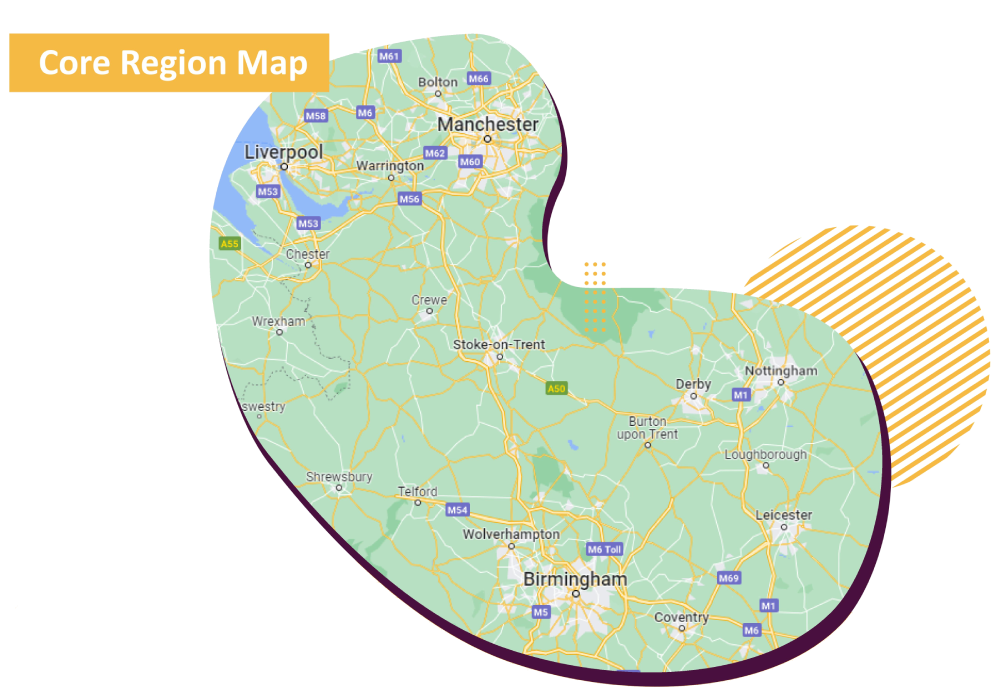
At Wallace Contracts, our project managers have delivered enough commercial refurbishments across Stoke-on-Trent, the Midlands and the North West to know where the pressure points are and how to manage them before they become problems.
Handover and Snagging
A proper handover means walking the finished project with the client, identifying and resolving any snagging items, providing relevant documentation (including any warranties, waste transfer notes and O&M information where applicable), and leaving the site clean and ready for occupation.
If you’re planning a commercial refurbishment in Stoke-on-Trent, Staffordshire, the Midlands or the North West, we’d welcome the opportunity to discuss your project. Call us on 01782 717 507 or fill in our online enquiry form.